


The poultry industry has always faced its share of challenges, and 2026 is no exception. This article examines the difficulties and risks that producers are already experiencing or expect to encounter this year.
Rising Costs, Shrinking Margins
Raw material costs remain the industry’s main concern in 2026, considered very significant by 74% of respondents to WATT Global Media’s annual survey. Energy costs, including transportation, have also increased after a brief respite in 2025, now cited as very significant by 64% of respondents, up from 59% the previous year.
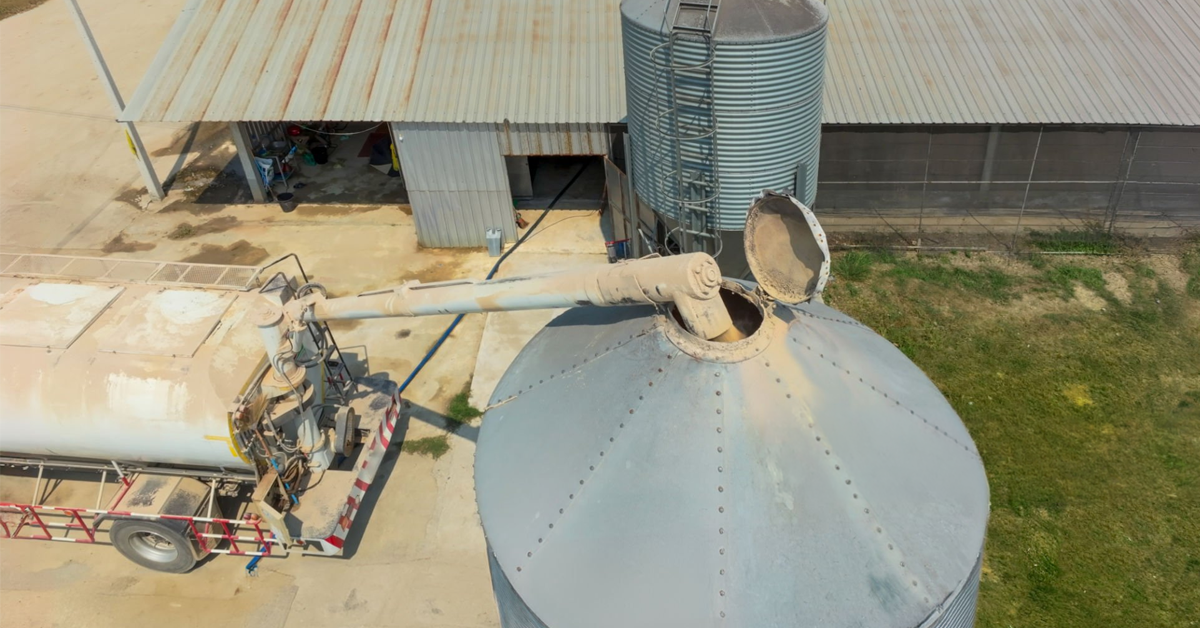
For producers, rising petrol prices have a direct impact on feed deliveries. Every unnecessary kilometer driven and every poorly planned delivery erodes profit margins. In this context, optimizing routes and delivery schedules is no longer a luxury – it is an operational necessity. Real-time tracking technologies and intelligent feed inventory management also help reduce unnecessary travel and accurately anticipate needs.
Tariffs: Pressure Across the Entire Supply Chain
International trade tariffs and tensions rank second among concerns, considered very important by 53% of respondents, indicating heightened sensitivity to policy changes affecting global input costs. Supply chain risk follows closely, also at 53%.
These uncertainties highlight the importance of rigorous feed management at the farm level. Fewer losses, less waste, and improved traceability of consumption are all levers over which producers have direct control, unlike fluctuations in global markets. Connected platforms now enable real-time tracking of consumption, identification of anomalies, and adjustment of practices before losses accumulate.
The Workforce: a Growing Risk
In Canada and the United States, poultry production and processing are often carried out by foreign and temporary workers. However, several government policies aimed at reducing temporary immigration directly threaten this workforce in a sector where local recruitment remains extremely difficult.
Globally, 51% of respondents in 2026 cite recruitment and retention challenges as very significant, a rising trend as operations become more technically complex and skilled personnel become scarcer.
The response to this pressure cannot rely solely on human labour. Automation tools, smart alerts, and remote monitoring enable an operator to oversee multiple buildings with fewer staff on site, without compromising the quality of care or the animals’ well-being.
Anticipate Rather Than React
Adaptability has always been essential in the poultry industry, and the drive towards modernization will accelerate to unprecedented levels in 2026. Collaboration across the value chain will be critical for profitability and resilience.
The producers who succeed in 2026 will not necessarily be those with the largest facilities or highest production volumes. They will be those who make the right technological choices to turn pressure into a competitive advantage.
At Intelia, this vision guides our tools: providing you with the data, alerts, and visibility needed to make better decisions.
Stay Informed!







Leave a Reply