


Poultry production is a demanding industry, often characterized by tight profit margins due to a combination of rising costs, market fluctuations, and operational challenges. For poultry and livestock growers, feed costs often represent 60-70% of total production expenses. Since feed is a crucial component in poultry and livestock production, it plays a crucial role in controlling production costs to enhance profitability. Over the past few years, rising feed prices have put pressure on growers, making it essential to optimize feed efficiency.
Factors Influencing Feed Costs
For poultry and livestock growers, feed costs often represent 60-70% of total production expenses (Thirumalaisamy & al., 2016), directly influencing the financial health of farming operations. Rising prices can squeeze profit margins, forcing producers to find ways to maintain profitability. Several factors contribute to fluctuating feed costs, including global market trends, transportation costs, weather conditions, and geopolitical events. The availability of key feed ingredients (like corn and soy) can be affected by droughts, trade policies, and shifting consumer demands, leading to price volatility. Effective feed cost management is therefore vital not only for staying competitive but also for meeting the demands of a growing global population.
Feed Costs and Profitability
With feed prices on the rise, enhancing your flock’s efficiency in converting feed into meat is crucial for maintaining profitability. The feed conversion ratio (FCR) is a critical measure of productivity. This ratio serves as a measure of an animal’s efficiency in transforming feed into the desired weight (meat). Improving FCR can help mitigate the impact of increasing feed costs, ensuring more sustainable and profitable operations. Several innovations have contributed to optimizing feed conversion, including advancements in poultry production technology. For instance, modern ventilation and climate control systems efficiently manage airflow, humidity, and temperature in chicken houses, ensuring flocks remain in optimal conditions.
The Role of Technology in Feed Management
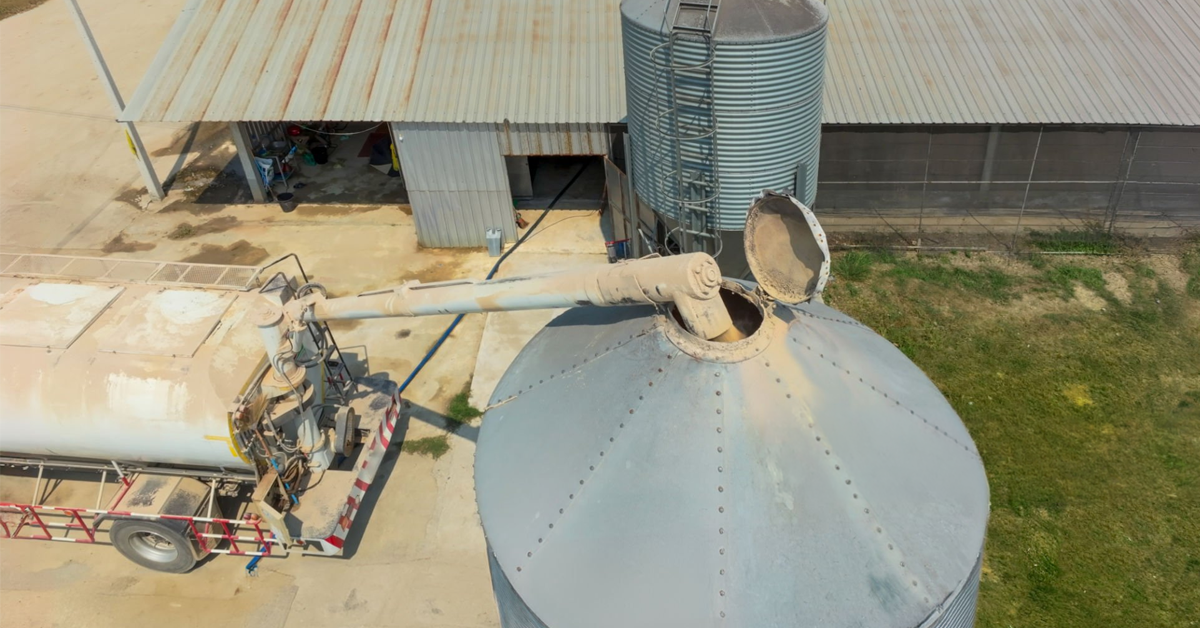
Advancements in technology have transformed feed management, making it more precise and efficient. Sensors and monitoring devices, such as bin scales and feed level sensors, provide real-time data on feed consumption, enabling farmers to fine-tune feeding strategies for maximum efficiency. Bin scales are so accurate that they can track the feed intake of individual birds, not just the entire flock. This detailed information allows growers to make well-informed decisions, minimizing waste and preventing overfeeding, which leads to substantial cost savings. When paired with software management systems like Compass, these sensors offer continuous updates and can trigger alarms when feed levels fall below set thresholds, ensuring timely feed deliveries and preventing shortages. Software management systems can also analyze data to predict feed needs, reduce waste, and lower costs, offering a competitive edge in a challenging market.
Conclusion
As feed costs continue to rise, poultry and livestock growers must adopt innovative strategies to manage these expenses. Embracing technology, improving feed conversion ratios, and understanding market dynamics are critical steps toward maintaining profitability and sustainability. By focusing on efficient feed management, producers can ensure the long-term viability of their operations.
Join us at IPPE 2026!
From January 27 – 29






Leave a Reply