Dominic Désy
Chief Executive Officer of Intelia Technologies. As CEO and co-founder of Intelia, Dominic leads a pioneering agtech company, leveraging over 20 years of experience managing technology teams to drive innovation in agriculture.
The United Nations Department of Economic and Social Affairs, Population Division (United Nations, 2015) has predicted that the world population will reach 8.5 billion by 2030 and 9.7 billion by 2050. To feed this growing population, food production will need to increase by 70 percent by 2050, leading to a 60 percent increase in demand for high-quality protein such as milk, meat and eggs (FAO, 2011).
Agricultural investments have played an important role in the growth of food supply through technological progress and will be crucial for sustainable food production (Pardey et al., 2014) and food security (Balș, 2010) in the future.
The fourth industrial revolution (Industry 4.0) will support the agricultural sector in meeting these challenges. Since the beginning of this new revolution, new technologies such as artificial intelligence, automation systems and cloud computing have been developed to connect the digital and physical worlds. Adopting these technologies will help the agricultural sector to create value and increase productivity and sustainability.
“Promoting sustainable agriculture requires a renewed focus on innovation and investment in research, technology and capacity development,” said FAO Director-General José Graziano da Silva at a meeting of G20 agriculture ministers in China (Da Silva, 2016).
The broiler industry is well-positioned to understand the challenges associated with sustainability. The continued demand for low-cost, high-quality protein has made the broiler industry a pioneer in efficient production. As a result, it will have the greatest demand for protein over the next 30 years as the population grows. In addition, developing economies around the world will move to diets with a higher proportion of animal protein and demand will continue to rise. Consumers increasingly want food that is produced sustainably.
At the farm, the two pillars of sustainability can be directly influenced by Intelia’s solutions:

Environmental Sustainability
The poultry value chain has made significant progress in reducing its environmental footprint and creating better environmental conditions for the birds and the people who work with them.
However, significant challenges remain as we better understand the environmental impact of day-to-day poultry production practices and potential new requirements such as the removal of birds to control a disease outbreak. The complexity of factors affecting air quality in production units increases attention to the welfare of poultry workers and the animals themselves. Reducing the environmental footprint of poultry manure and other waste from poultry production can include innovative, value-added products and changes to poultry feeding.
The key areas where Intelia has an important role to play are:
Air quality
It is influenced by many factors, including ventilation and litter quality, which can create suitable conditions for disease development.
Use of antibiotics
Apart from economic losses, certain bacteria and viruses are transmissible to humans and have a direct impact on the population and health care. The current solution to improve poultry health is to administer antimicrobials during rearing, which in the long term reduces the effectiveness of the antibiotic response in human medicine. This puts increasing pressure on poultry and other livestock farmers to change their practices as antimicrobial resistance becomes one of the biggest public health problems of the 21st century.
Feed efficiency
Feed efficiency plays a critical role in reducing environmental impact. Due to advances in nutrition and bird breeding, pullets today require 48 percent less feed during rearing than in 1960, and laying hens have 42 percent better feed conversion efficiency. If 1960 technology had been used to produce the 2010 egg supply, 78 million more chickens, 1.3 million more acres of corn and 1.8 million more acres of soybeans would have been required.
Odor
Unpleasant smells associated with the decomposition of animal manure can be classified as odors. The decomposition of manure can produce gasses and volatile organic compounds that contribute to odor. Air temperature, relative humidity, time of manure accumulation, ventilation of stables, weather conditions and dust levels can all influence odor formation and distribution.

Social Sustainability
Consumers want to be able to choose from a wide range of healthy, tasty products at a reasonable price. They demand that the food production system is safe and want proof that their food has been produced in a socially responsible way. Animal welfare, food safety and working conditions are issues that are increasingly at the forefront of consumer interests.
The key areas where Intelia plays an important role are:
Animal welfare
Ethical and moral concerns about the way we produce food have come to the fore in today’s society. In addition, societal concern about the welfare of farm animals and the sustainability of animal production systems has led to a significant shift in customer demands.
Traceability of food
Recent foodborne disease outbreaks have created a consumer demand for greater transparency and traceability from farm to fork. While numerous traceability solutions already exist from the processing plant to the retailer, the farm still needs to be largely decoupled from the sharing and recording of information. The push towards blockchain technologies highlights this pressure from consumers and will lead to efforts to connect the farm to the rest of the production chain.
Worker health and safety
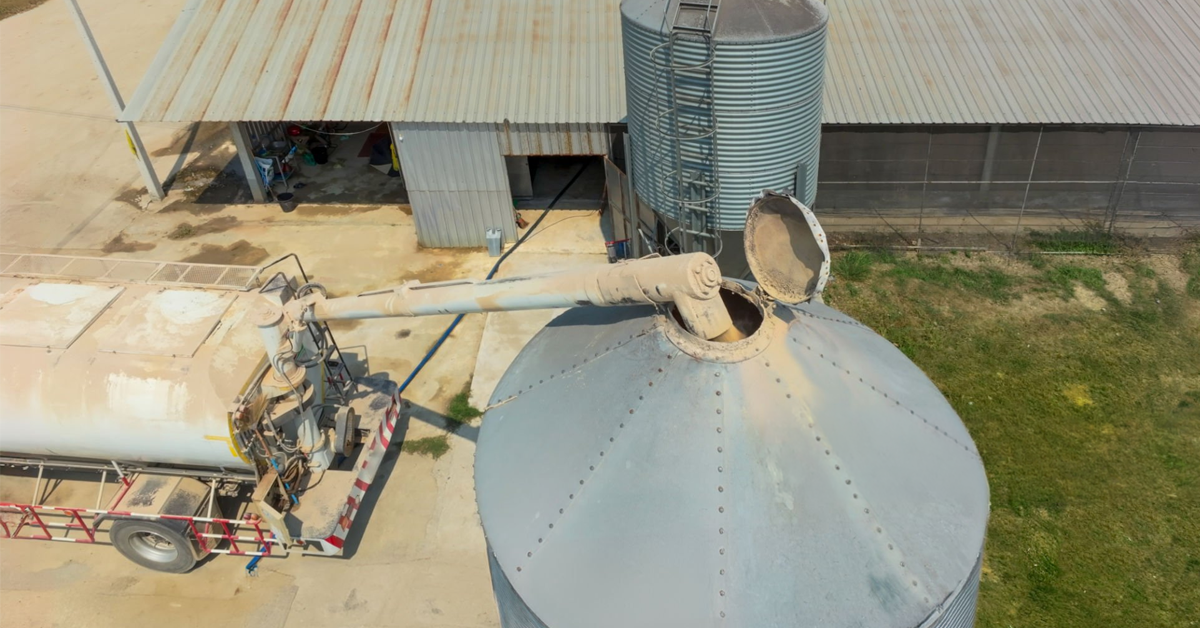
In the absence of accurate methods to assess bins, grower and integrator employees must climb on top of bins, posing a safety risk. In addition, one of the biggest complaints associated with poultry houses is the smell of manure. The excessive release of ammonia gas from poultry manure not only contributes to this odor, but can also be harmful to the birds in the barn and the employees who spend time there.
The challenge is that best practices often fail to deliver on the promise of improved production because they are not applied consistently across the organization. Intelia’s solution transforms raw production data into palatable information that the production team can act on immediately.
Intelia’s Solution
By providing real-time data from farms and making this data available to all stakeholders in the poultry production chain via a single platform (Compass), Intelia helps poultry producers to meet the challenges of the industry efficiently and cost-effectively. The immediate insight that producers gain from using Compass influences their production management decisions and ultimately impacts the sustainability of their operations.
Fully integrated with farming activities, the Intelia solution monitors most of the parameters that define and regulate the quality of the production environment. The insights gained from the data can have a positive impact on a variety of indicators, either through early notification to users of deviations from an expected trajectory or through predictive analytics that forecast current conditions over time. Some examples of the many areas where Intelia’s solution supports greater sustainability in poultry production.
Feed intake and animal welfare
Feed accounts for at least 60% of the cost of broiler production. The larger the bird, the greater the impact of feed conversion on total costs. Even minimal improvements in feed conversion can lead to incredible savings if repeated on a larger scale. When an optimal temperature is maintained, the calories from the feed are optimally utilized for growth and weight gain, resulting in favorable feed conversion. When temperatures are not optimal, the animals use energy to regulate their body temperature, which negatively affects feed conversion. Careful monitoring of temperatures and airflow allows a better understanding of the animals’ comfort and stress levels, which also has an impact on feed conversion. By cross-analyzing temperature/airflow, weight gain and feed intake, Intelia can predict feed conversion and help breeders create optimal conditions to maximize feed conversion and animal welfare.
Air quality and odor
Real-time monitoring of humidity, temperature, CO2 and ammonia enables proactive management for optimal bedding and ventilation conditions that affect air quality. These two elements are crucial for the health and welfare of the birds as well as for odor in the farm. In addition, an alarm function ensures that staff are notified as soon as conditions deteriorate so that action can be taken quickly to optimize air quality.
Antibiotic-free production
The right environmental conditions in the barn are also crucial for efficient antibiotic-free production. Optimal temperature, air velocity and relative humidity should be considered depending on the age, production phase and size of the birds. Birds under environmental stress from heat, cold, very dry or very humid air can have impaired feed intake and intestinal motility, resulting in reduced digestibility and slower growth. Intelia’s system monitors environmental conditions in real time, alerts users to deviations and detects and reports anomalies that can be cross-analyzed and linked to observable and undesirable events such as slowed growth.
Lighting conditions
Lighting conditions in the chicken house are another aspect of production management that can affect feed intake behavior, mobility and digestion. Lighting programs aim to vary light levels according to the age of the chickens and provide adequate light to optimize growth. Light intensities of less than 10 lux and 4 to 6 hours of total darkness per day improve feed conversion, indicating slower feed intake and better digestibility. Intelia’s monitoring of light conditions and the insights gained from cross-analysis with weight gain and feed intake help breeders and integrators to adjust and optimize light programs to influence growth.
Closing the information loop
The farm is the company’s most important cost center – 60% of the cost of a pound of chicken is incurred here. Decisions made on the farm can have a positive or negative impact on the performance of the entire company. Any improvement made on the farm by optimizing production methods and making better management decisions will result in significant cost reductions and greater sustainability of poultry production. By connecting all farms to the rest of the production chain, Intelia becomes the information hub that fully integrates all aspects of production.
With Intelia’s solution, growers and integrators can optimize their resources more effectively and efficiently, reduce costs and lower their environmental footprint, while creating better environmental conditions for the birds and the people who work with them. Decisions are based on data-driven insights and information is shared transparently and in a timely manner with all stakeholders. This creates a trust-building ecosystem that can have a huge impact on breeders, integrator staff and consumers. The industry can rely on this trust to build more sustainable, socially responsible poultry production while meeting the growing demand for food and its profitability targets.
Conclusion
To summarize, the growing world population and the resulting increase in demand for high-quality protein require innovative approaches to improve the sustainability of food production. Intelia’s solutions represent a significant step forward in addressing the challenges facing the poultry industry, particularly in terms of environmental and social sustainability. By using technology to monitor and optimize key production parameters, Intelia facilitates improvements in feed efficiency, air quality, antibiotic use and animal welfare. These improvements help to reduce the environmental footprint of poultry production and ensure that food production systems meet consumer demands for safety, traceability and ethical standards.
In addition, the comprehensive integration of Intelia into farming activities and the provision of real-time, actionable data enables poultry producers to make informed decisions that promote production efficiency and sustainability. The use of Intelia technology across the poultry value chain underlines a significant shift towards more responsible and sustainable protein production practices. It’s clear that technology and data-driven insights will play a critical role in tackling the complex task of feeding a growing global population while minimizing environmental impact and being socially responsible. Intelia’s role in shaping a sustainable future for poultry production illustrates the transformative potential of the fourth industrial revolution in the agricultural sector and sets a precedent for innovation, efficiency and sustainable protein production.
Stay Informed!